Monday, July 29, 2019

Organizing Campaign Material

I've been looking at my current campaign material and considering ways to organize it more effectively. Usually, I compile a series of campaign documents that I can refer back to during play or as needed outside of play. These are typically:

  1. Character Creation (Player's Handbook)
  2. Subset of Rules in Play (Dungeonmaster's Guidebook)
  3. Manual of Monsters
  4. Campaign Setting

These have always worked "good enough" for me, but still turn into some degree of page-turning that can slow down speed of play. So recently, I was looking at alternative options that don't involve money.

My exploration of the subject turned up a couple of options:

  • Roll20
  • Full Website
  • Campaign Wiki
  • OneNote or similar software
Of these, I've used Roll20 successfully for gaming before but I'm not sure its campaign management tools were really what I needed for the volume and interrelatedness of the material I have (its mapping capabilities are on point, though, and will almost certainly see future use by myself). OneNote carries a learning curve and still involves having lots of separate documents; I just want to start making material - not learn a whole new platform. A full website would be really cool, but I don't have the experience to do this easily, either.

And then there was one. I've used Wikimedia's platform in the past to organize ideas. Wikis are great for connecting and organizing information. They are easy to add onto. And that's why I settled on this option. Unfortunately, not many sites seem to offer free Wikimedia-based wikis, so I ultimately landed at Wikidot. There's a minor learning curve - the syntax varies a little; tags work slightly differently than categories in wikimedia; wikidot has modules that wikimedia lacks; etc. Still, this is much easier than learning new software and looks like it will serve the exact purpose I need it to.

Cool Things You Can Do

I am still exploring various things I can do with the wiki, but the coolest one I've come up with so far is putting entire dungeon maps and notes in it with appropriate links. This lets me click links and move through the dungeon. It also lets me link to specific monsters, traps, puzzles, etc. as needed so I'm never more than a mouse click from the information I need during a game.

I can also use the wikidot version of a namespace to manage accessibility, so players can see the wiki, but not the GM-only sections. I can also use different layout templates and such by namespace (called categories in Wikidot), if I want. This will also give another layer of organization to the wiki, which I appreciate.


Another great thing about wikidot is that it also offers each wiki its own website and forum. I haven't dug into those features yet, but I think they will help a great deal in making this wiki the go-to for future campaigns.

Monday, July 22, 2019

3D Modeling and Mapping the Dungeon

As you probably know if you have followed this blog lately, I am mapping a dungeon again. Today, I'm going to talk about different approaches I've used to making 3-D maps and representations. But first, there are a few ways to produce these. I'll talk a little bit about them below.

CAD Software

Computer Aided Design Software is software used to create thee dimensional models of things in a computer. There are a great many of these, but the ones I am personally familiar with are SolidWorks and Pro-E. I have a passing acquaintance with SketchUp and access to YouTube, so I'll go out on a limb and claim to be able to use that, too.

The benefits of such software is that you can make a 3-D model of every room in your dungeon down to nails and brackets, if you want. The level of detail is up to you. And then you get move it around, hide walls, take screenshots, etc. SketchUp lets you do walk-throughs. Engineering software lets you do things you will never ever ever need to do like model the voticity of blood flowing through your dungeon. Well. Maybe that might be useful for some...

The drawback to using CAD software is twofold - there can be a rather steep learning curve to such software and it takes a while to produce a good model.

SketchUp

This probably falls under "CAD Software", but I'm going to break it out because it is cheaper, more popular, and doesn't seem to be nearly as sophisticated as the professional CAD programs I'm use to working with. Also, it was originally geared toward architectural applications, and not engineering ones.

SketchUp lets you build 3-D models of just about anything, but it was originally targeting architectural designs - buildings, landscaping, etc. This focus potentially makes for some excellent end products, complete with lighting, shadows, and everything. That can be really cool, if you go ham with it, but doing so takes time. I don't profess to be a SketchUp expert, so I doubt I'm any form of fast, but I can see where you can quickly bang out an important room or locale to get a nice visual for players. Just as with the CAD software mentioned above, I still think it's too cumbersome to use for an entire dungeon, at least unless you just love doing that sort of thing. Then good on ya!

Isometric Maps

These maps offer an isometric view (think Diablo and its clones) of the dungeon. They are fantastic for showing relative heights of rooms, but they require special graph paper - or more talent than I will ever have - to draw really well by hand. I haven't found a computer map-drawing tool that makes these, either, though I am probably just missing it.

The benefits of isometric maps is that they are simple to read if drawn well, display height differences well, and are far faster to make than using CAD software. Drawbacks are that you won't get the degree of detail and versatility as with CAD software, and it takes talent to make these look good. Moreover, some 3-D dungeon designs may not read well, no matter how good you are (try to imagine a 3D maze in isometric perspective).

Is It Worth It?

In my experience, isometric maps just look cool. They can also help give a sense of elevation, which for very vertical maps can be essential to understanding the flow. My only issue with using these is that I suck at drawing them. So I tend to gravitate to a computer-based approach.

I have used both SketchUp and SolidWorks to produce models of dungeon elements, rooms, etc. I am far more familiar with the likes of SolidWorks and Pro-E, so I tend to get faster and better results from those than SketchUp, but I can see where someone versed in the latter-most might be more productive than me.

What I find works well for me is breaking out CAD software to produce images like the one below. I created this to get a sense of scale between the towers, wall, and enclosed courtyard. I now have the dimensions of all of these elements in a way that makes visual sense to me and can begin drawing a map of the keep. I also have a spiffy visual for the players.

This took about 2 hours because I kept fiddling with dimensions to get the sizing just right.

Sunday, July 21, 2019

Music as Inspiration

It has been a busy and chaotic month for me, but things are starting to quiet down. I am also beginning a new project that will find its way to the blog soon. All of that said, I have to say I really enjoy poking around the internet for inspirational art and music. I'm not sure what it is about the latter, but a good piece of music creates this mental image pregnant with ideas. I find writing easier, and everything just seems to flow.

Interestingly, I find that this is not genre-dependent, although I find certain types of music work better for certain fictional genres, and I tend to get more from classical music in general for any genre. Still, some prog rock (e.g., Bitches Crystal by ELP, Rainbow Demon by Uriah Heap), industrial, and some electronic music do wonders for science fiction for me, while other prog rock (e.g., South Side of the Sky by Yes, Jerusalem by ELP) and folk music works for fantasy. I also find Led Zeppelin good for science fiction, and I'm not sure if that's weird or not.

What music do you find inspiring and how? I'm always interested in expanding my listening!

Friday, July 19, 2019

Inspiring Images

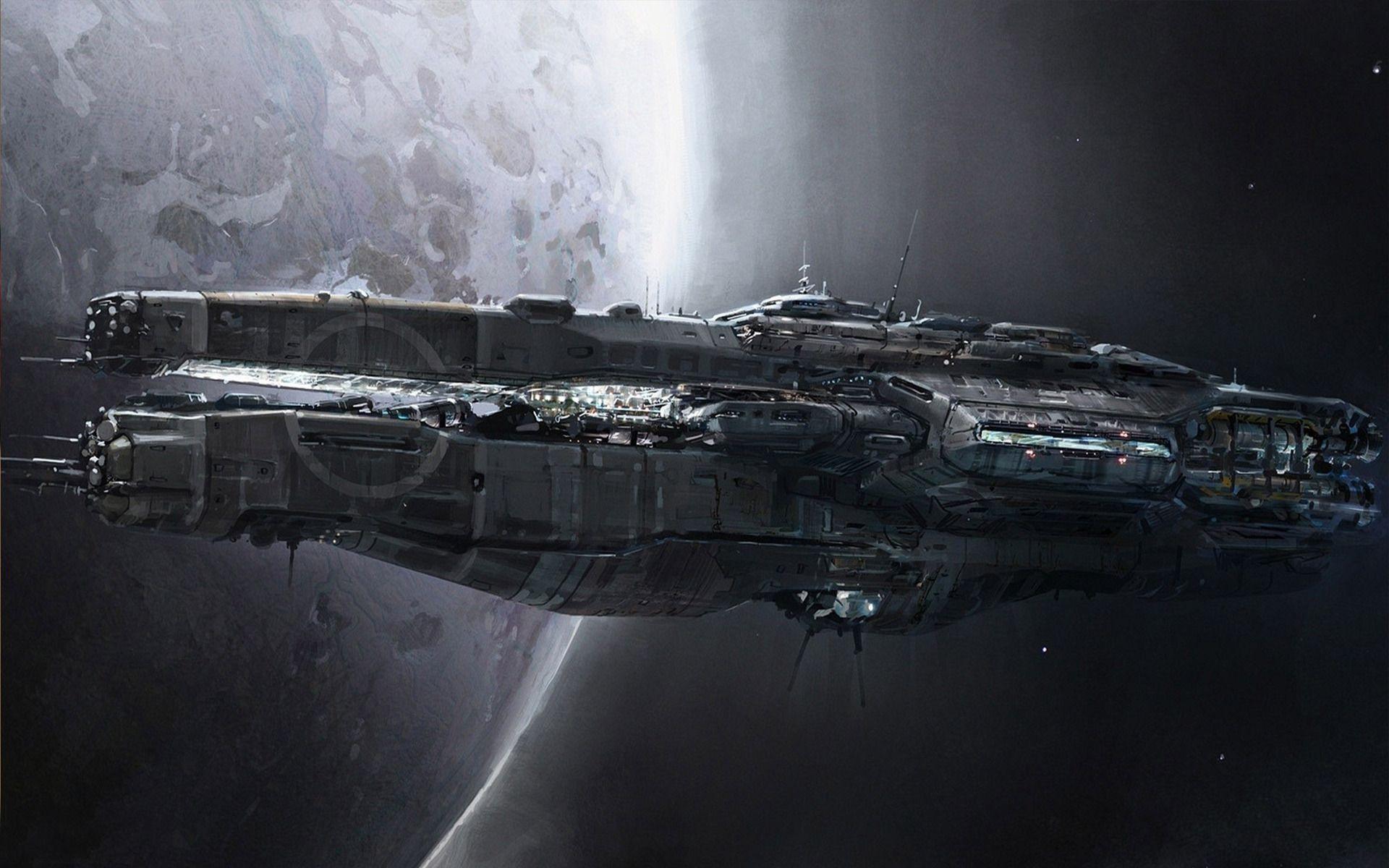
With my move complete and unpacking as done as it will get until the last of my furniture arrives, I thought I'd post some pictures that are inspiring me today.


Monday, July 15, 2019

Another Set Piece for the Dungeon

I just finished mapping up another set piece for the dungeon, and I think most players will like how I mixed a pair of RPG and myth tropes to get something a little different and potentially terrifying. This set piece is all about ambiance, but that foreboding atmosphere will be backed up with one heck of a level boss.

This time around, I'm trying to make heavy use of the environment, which direction doors open, locked versus unlocked doors, and a general degree of creepiness to keep the players on edge, catch them off guard, and ultimately hit them hard with a single monster that will use the environment to its full advantage.

Granted, a typical GURPS party is horribly deadly when facing a single opponent, but that's where the environment comes in. The players will have their mobility noticeably limited, with any mistake in movement resulting in the sort of debilitating condition that can ravage defenses and leave a PC helpless at a critical moment. I'm piling on top of this doors that open in specific directions and locked doors to make running away more difficult, unless they specifically prepare a path of retreat as they advance.

My hope is that these two things will combine to make for the sort of encounter my players will talk about with horror and gratification (once they get past it!) for years to come.

What sort of things have you done in your games to make a single monster actually effective against a well-prepared party?

Monday, July 8, 2019

A Monster a Day Part II

I've been trying to keep up this pace, but I've slowed down. I honestly don't know how Enraged Eggplant does it over at Generic Universal Eggplant. Making a monsters, crosschecking rules, checking sources, and fitting them to the setting has proven more time consuming than originally anticipated, but still, I have produced about twenty new monsters since I started. I'm hoping to maintain that pace for another month or so, or at least until I have a few areas mapped out.

On the upside, I have statted up 14 mephits and a variety of demons and undead, so there is that. I need to work on some not-so-supernatural baddies, too. I have some ideas for the inhabitants of the local forests and their link to the Abbey, so I'm guessing they'll be next.

Monday, July 1, 2019

Martial Arts in GURPS Dungeon Fantasy

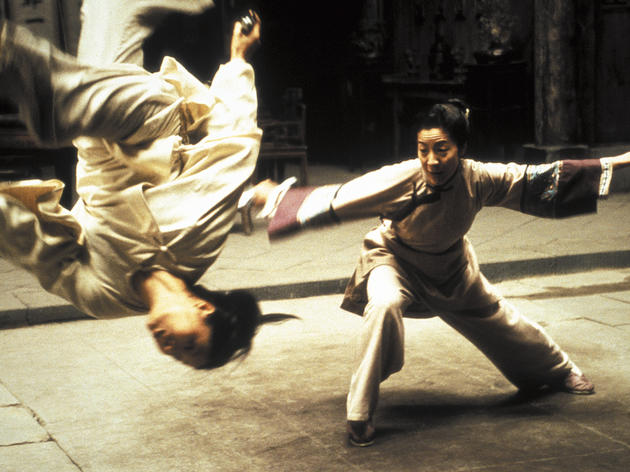
Two Swashbucklers going at it?
Back in 2015 into 2016, I ran a brief GURPS Dungeon Fantasy game in which the party's fighter and I came upon an interesting idea - finding a way to fit Martial Arts Styles into Dungeon Fantasy. It was to that end that we hammered out what a Style Perk should amount to and how to handle things like techniques within the simplified framework that is DF. Even though we didn't get a chance to implement it before university consumed my gaming time, I'll present it here as an untested idea that may prove useful to your own gaming, should you choose to include it.

What Is a Martial Art Style?

Martial arts styles are collections of skills, perks, and power-ups that help define a particular way of fighting. Every style has, at minimum, certain components:
  • Martial Arts Style Familiarity
  • Core Skills
  • Cinematic Skills
  • Perks
  • Power-Ups
Together, these five components provide a framework for fighting in this style. The core skills are those that the style teaches, and the cinematic skills represent the body of legend surrounding the style. Combat perks are often not restricted by class (see DF 11), but they are listed here for both completeness and as a guide to what is appropriate for the style. Lastly, power-ups those power-ups that can be bought, regardless of template that normally grants access. In fact, many power-ups do are not otherwise available to any class!

Style Familiarity

Of these, the Style Familiarityis among the most important; it grants access to all of the other features of style, regardless of template. It includes a number of benefits as described below:
  • Access to all of a style's associated skills, cinematic skills, power-ups, and perks. This only covers access, but does not fulfill prerequisites, such as Trained by a Master.
  • The effects of Claim to Hospitality from DF 11 on a roll of 6 or less.
  • Stylists gain a +1 bonus to rolls when interacting with co-stylists. This applies to obvious rolls like reaction and influence rolls, but also to the likes of Games, Interrogation, Merchant, etc. Treat this as a very narrow Reputation.
  • If you have Style Familiarity for all of your opponent's styles, you know his tricks. Reduce the defensive penalties from his feints and Deceptive Attacks by -1.
  • If the GM normally allows character points to be spent by certain templates mid-play, he should definitely allow stylists to spend points in a similar manner on style-related traits and skills.

Techniques as Power-Ups

Tracking individual technique levels, including defaults, and all of the finickiness this would introduce into the game, just isn't thematically appropriate for Dungeon Fantasy. But there are ways around this.

For starters, only those who have points in a technique can use it. Taking this a step further, each technique is bundled into a power-up that raises its score - preferably to that of the base skill. These power-ups also incorporate other traits to keep as many rolls as standard as possible - i.e., rolling at a +0 modifier as much as possible. And wherever possible, they also enhance the flavor and awesomeness of the underlying techniques by adding small benefits.

Finally, these power-ups are not universally available to all delvers. Only those who have invested a point in an appropriate Style Familiarity gain access to the power-ups covered by that specific style. These two tweaks cut down on the number of techniques floating around the game, place them in the same bin as any other power-up that the player has to track and remember how to use, and simplifies rolling by keeping everything as standardized as possible.

Future Work

I am currently continuing to expand my list of power-ups for this system and will be posting them here as they are completed. I hope you enjoy this add-on and will critique my builds in the comments. I always welcome feedback on this sort of thing!

Monday, June 24, 2019

Automating Architect of Worlds Update

Lately I've been learning a lot about Python and how it handles objects through another side project, and I'm starting to see where I should go back and rework what I have so far for Architect of Worlds. This comes at a good time, since I've gotten up to generating everything but moons, and that step is looking like it will be a bit more intensive than the text suggests - in terms of programming, that is.

So I think my next step will be to go through the original code, clean it up as much as possible and implement a cleaner data management system. I also want to break out a couple of bits into their own functions so they can be reused whenever necessary...I'm looking at you, orbital placement! Once this is done, I'll proceed to do moon placement.

I also have a couple of questions about the model being presented, since it doesn't appear capable of producing the insane number of moonlets our gas giants have (79 for Jupiter and 62 for Saturn). Mind you, in terms of storytelling, most of those moons are inconsequential, but knowing their total number is helpful, and if I know that, I can place them automatically and develop them from there. So, because my application doesn't involve a human rolling dice and interpreting results, I don't see an issue with rolling up 120+ moons no one will ever care about visiting.

Also, When you roll things up randomly, sometimes you get interesting results that spark creativity. So I'd rather roll up a bazillion moons and risk getting a GM's creative juices flowing than say, "There are a lot of them, and they probably won't be interesting enough to justify the time you'll spend rolling dice to generate them." But that's because of the medium, not a fault in Jon's system by any means.

So that's my plan. I'll keep you updated on progress. Hopefully I"ll have enough put together to use soon!

Monday, June 17, 2019

Random Mapping Tip

I have come across something that is pretty obvious and I should have been doing this entire time, but hey, we aren't all perfect. So in case you're not perfect either, I thought I'd share this tip with you:

If you are mapping an area and think of what a room or group of rooms should be, WRITE IT DOWN!

Right now, at least half of you are probably shaking your heads thinking, "Man, this guy didn't do that before?" and I don't blame you. But I cannot explain how much faster mapping this abbey has been because I laid out all the rooms as I drew them. I know it won't always be this easy, and as I leave the more systematically-designed regions behind, it'll get harder, but that's all the more reason to follow this tip!

And I'm going to extend it to more than just what a room is. If I think of what goes somewhere, it get noted. If I think something needs an object or treasure or trick or trap, it gets noted. No more going back and sorting rooms later. My later pass will be to fill in the gaps and then check that everything makes sense.

I hope this helps someone out there!

Monday, June 10, 2019

Mapping around the Abbey

Today I worked on an overland map for the 60-mile area surrounding the abbey, largely to see how it connects to the outside world. Now I can definitively say that the abbey sits on a forested hill at the end of what would be generous to called a wooded road. Even trail might be generous. The nearest village is a day's hike away, and the trail ever got used to bring the monastics at the abbey food and supplies.

Tuesday, June 4, 2019

The Mephit to My Madness

I like mephits. I don't know why, but I just do. They're impish little elementals with a nasty disposition who, if used effectively, can either be a real nuisance or downright deadly in a mixed group. Also, they're elementals, and I like elementals. So it probably comes as little surprise that I am writing up and planning to include the little buggers in my dungeons.

Now, I could post my write-ups, and I may just do that at some point, but today, I'm going to take a different tack. Today, I'm going to explain how mephits fit into my vision of the world.

Mephits are small, weak-minded, dimwitted elementals that faun over their masters in an attempt to ingratiate themselves to the most powerful entity in the room. This is their form of social climbing, since a big, powerful master means a big, powerful protector - not that any mephit would admit to needing protection!

Of course, this also means that larger foes may well have these winged nuisances on hand when adventures encounter them. This does not bode well for adventurers. In combat, mephits are masters of the hit-and-run. They make good use of their flight to stay out of range and use their elemental powers to inconvenience, if not incapacitate, adventurers. On their own, this is annoying, but when a big honkin' demon is trying to make macrame place settings from your entrails, things can go south really quickly.

And speaking of demons, I'm starting to flesh out four of their lords. They don't have scary-sounding, difficult-to-pronounce names yet, just epithets as working names. But these guys don't just use other demons as pawns. They command undead, elementals, and some mortal abominations, too. So is it any surprise that they have mephits in their employ? It shouldn't be!

Now if there is one thing most people know about mephits, it's that their variety is staggering. Elementals came in four (maybe five, if you prefer Chinese- or Vedic-inspired fantasy) flavors - Air, Earth, Water, and Fire. There are around a dozen published mephit types. I am maintaining that tradition by including the following list of mephits: Air, Ash, Dust, Earth, Fire, Ice, Lightning, Magma, Mist, Salt, Slime, Steam, and Water. And since that picture was labeled "Shadow Mephit", I think I'll add that in, too. That's a lot of mephit variety, but it suits these guys. And with their association with demons, I think variety is completely appropriate.

What have you done with mephits in your games?

Friday, May 31, 2019

Requires Concentrate - A GURPS Blog

I recently discovered Requires Concentrate, a GURPS blog on GMing primarily science fiction (hell yeah!) and fantasy games. And while I am still poking through it as I type this, I have to say this post on what happens to stuff in vacuum already has me in love with it!

I've said it before and I'll say it again: These kind of little details are what breathe life into exotic settings, like living in space. The idea of the glues that hold door signs to walls outgassing and losing efficacy when a ship decompresses is just cool and weird. That eggs won't be bothered by what can suck a human through a far-too-small hole in a very gory way is amazing. These little things will draw your players in. Use them!

So that's it for now. Go check out Requires Concentrate and tell me what you think of it in the comments below.

Monday, May 27, 2019

More Progress on Architect of Worlds Automation

I'm happy to report that I'm ever so closer to being up to date with what Jon Zeigler has already published. I've not completed Step Eleven (yikes! that was a mess) and finished off Step Twelve, as well. That just leaves a little more basic planetary information from Step Thirteen, and I can dig into the moon stuff.

If I am able to get this done before Jon drops the next portion of the system, I'll go back and try to clean up the mess I've made everywhere I making this work. I think I can get it much cleaner than it currently is. Then I'll start working on using the data generated to create a database I can further manipulate in a program like Access.

That or I'll get back to fleshing out mechanics and making setting content. Either one will work. But being able to generate systems quickly is key to making this game work at all. I want players to have the agency to just shoot off in a random direction or ask, "What's over here?" and I'm just a couple mouse clicks from some sort of answer.

Wednesday, May 22, 2019

Reorganizing the Blog

Now that I finally managed to get 1,000 gp and cast resurrection on myself, I'm reassessing the blog and its organization. I may be shuffling some stuff around a little, so expect some possible changes to tags, tag structure, and pages. I don't see myself pulling down any posts, but since I am currently on a two-pronged attack to content creation, I think I need to sort posts along those lines a little better. If not for your sanity, for mine.

As a side note, I am hoping to be able to return to every-other-day posting in the near future, but I'm not quite ready yet. I'm still putting together content from my Science Fiction project and my fantasy stuff. A few things to expect at some point: a lot of power-ups, an alternate approach to DF character generation, and a methodology and step-by-step setting generation for the science fiction setting.

Tuesday, May 21, 2019

A Monster a Day...

Mapping this abbey has made me realize how few demons I have statted up at present. To that end, I have done a little work on developing a couple of demon lords and am working on the kinds of demons, spirits, and undead they command. So far, I've already beefed up my list a little and am trying to maintain a pace of one to two monsters a day until I feel comfortable stocking a dungeon thematically.

A nice side benefit is that I'm accruing some Hidden Lore (Demons) and Hidden Lore (Undead) information that players might discover depending on what they investigate. Of course, even if they don't look into such things, it will provide a structure that should provide that much-needed cohesion amidst gobs of otherwise desperate monsters. I know funhouse dungeons are a staple in the genre, but I prefer there to be more internal logic. It helps maintain an ambiance.

What sort of background do you use to help seat your monsters in the worlds you create? Do they just exist on a whim or do they have deeper origins?